
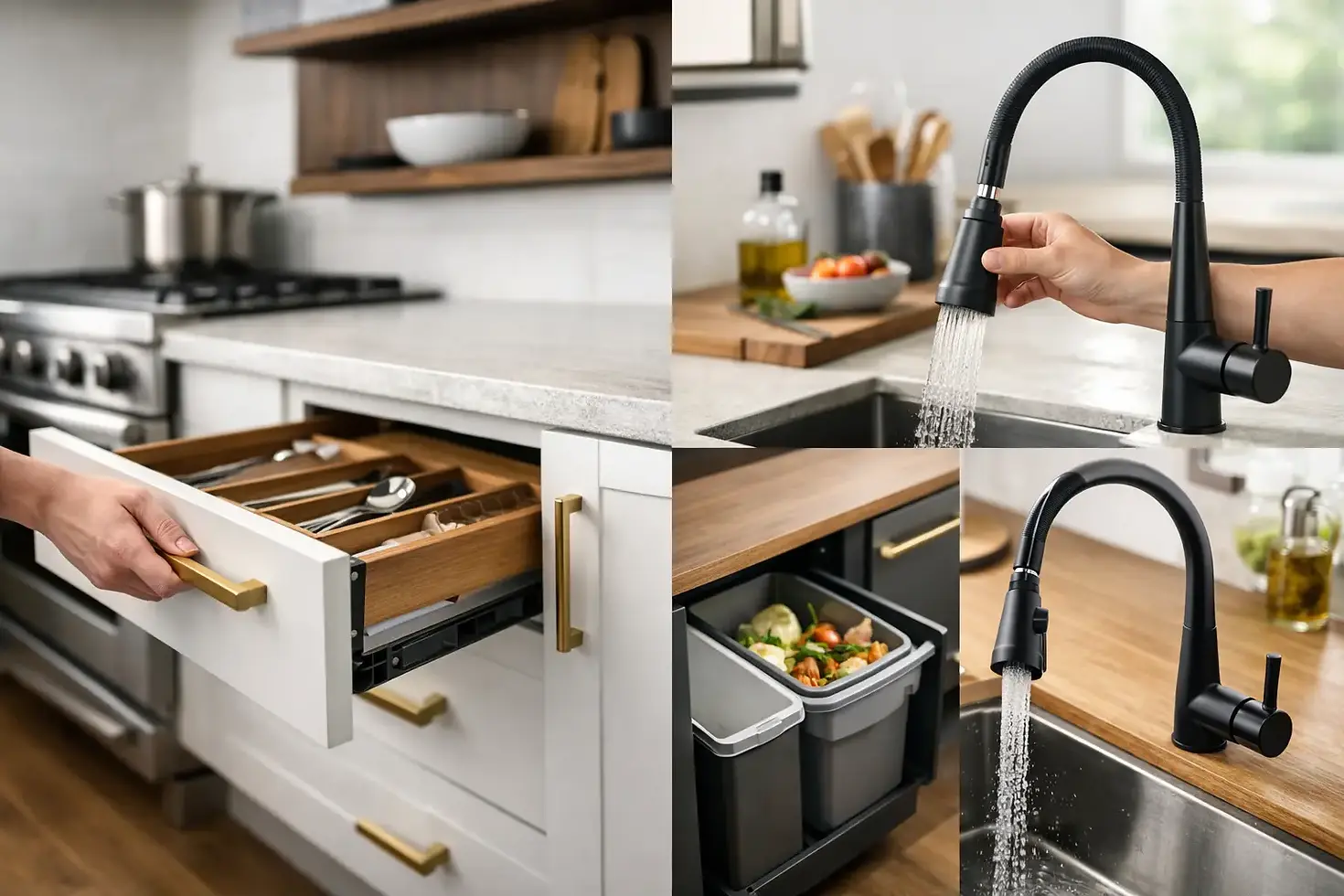
Kitchen Hardware Ideas That Earn Their Place
A kitchen can be beautifully proportioned, carefully painted and made from exceptional materials, yet still feel unfinished if the hardware is an afterthought. The best kitchen hardware ideas consider the details your hands meet every day: the pull of a drawer, the weight of a handle, the quiet close of a cupboard and the ease of reaching a well-used utensil.
In a bespoke kitchen, hardware is not simply decoration. It shapes how the room works, how it ages and how confidently every cabinet performs. Choosing well means balancing visual character with comfort, maintenance and the practical rhythms of family life.
Kitchen Hardware Ideas for a Considered Scheme
A coherent scheme begins with a simple question: should the hardware quietly support the cabinetry, or become a defining feature of it? Neither approach is inherently better. It depends on the style of the kitchen, the scale of the room and the finishes already doing the visual work.
In a painted Shaker kitchen, aged brass cup pulls and knobs can bring welcome warmth and a sense of tradition. Unlacquered brass develops a natural patina over time, which many homeowners appreciate for its lived-in character. It is less suitable, however, for those who want every surface to remain uniformly polished. A lacquered brass finish offers a more consistent appearance, though it will not acquire the same depth with age.
For contemporary cabinetry with clean lines, slim edge pulls, recessed channels or discreet bar handles can preserve a calm architectural look. These options are particularly effective in larger banks of tall cabinetry, where prominent handles may interrupt the overall rhythm. Handleless designs can look beautifully refined, but they need careful planning. Finger-pull channels require regular cleaning, while push-to-open mechanisms are best reserved for selected doors or drawers rather than every heavily used cabinet.
Blackened steel, antique bronze, polished nickel and satin stainless steel all have their place. The aim is not to match every metal perfectly, but to create a deliberate relationship between cabinet hardware, taps, lighting and appliances. A polished nickel tap may sit comfortably with aged brass handles when the difference is intentional and repeated elsewhere. Randomly mixing finishes, by contrast, can make a carefully designed kitchen feel unsettled.
Choose handles for the way you use the room
A handle should feel right before it looks right. Deep drawers carrying pans, crockery or food stores need a pull that is comfortable to grip and securely fixed. Narrow or shallow handles may suit a light cutlery drawer, but can feel inadequate on a wide drawer filled with cast iron cookware.
Scale matters too. Long bar handles can emphasise the horizontal lines of broad drawers, while smaller knobs lend a more traditional, furniture-like feel to framed cabinets. Using two complementary handle styles is often enough to create distinction: perhaps knobs on doors and cup pulls on drawers. Adding too many shapes and finishes can dilute the sense of order.
Positioning deserves equal care. Consistent alignment brings precision to the cabinetry, especially where drawers and doors meet. In a handmade kitchen, these small decisions are resolved during design and cabinet making, rather than treated as a last-minute fitting exercise.
Functional Kitchen Hardware Ideas Behind Closed Doors
The hardware inside a cabinet often has the greatest effect on daily life. Quality runners, hinges and internal storage systems may not be the first details a visitor notices, but they are the details you will rely on hundreds of times each week.
Soft-close hinges and drawer runners have become expected in a premium kitchen, but not all are equal. Well-engineered mechanisms should close smoothly under a realistic load, remain accurately aligned and allow sensible adjustment during installation and later maintenance. Good hardware gives drawers a controlled movement rather than a dramatic slam or an overly forceful pull-back.
Full-extension drawers are particularly valuable in base cabinets. They bring the back of the drawer into view, reducing wasted space and avoiding the need to reach around items stored at the front. A deep pan drawer can be fitted with adjustable dividers, while a shallower internal drawer above it keeps utensils, spices or table linen organised without adding visual clutter to the exterior.
Corner cabinets deserve honest consideration. A traditional corner cupboard is economical and can offer useful storage, but the far reaches can be awkward. Pull-out corner systems improve access, although their mechanisms take up some internal volume and add cost. In some layouts, a run of wide drawers or a tall larder placed nearby may provide better value and easier organisation than a complicated corner solution.
Storage should follow your routine
The most useful internal hardware is planned around what you own and how you cook. A keen baker may benefit from a low, strong pull-out shelf for a stand mixer. A busy family might prioritise a bin drawer close to the preparation area, with separate compartments for waste and recycling. Those who buy dry goods in bulk may find tall pull-out larders helpful, provided the space is not so narrow that packets become difficult to see.
Consider the practical zones of the kitchen: preparation, cooking, washing and storage. Knives, chopping boards and waste bins should be close to the preparation surface. Pans belong near the hob, while glasses and everyday crockery should be within easy reach of the dishwasher. Hardware is at its best when it shortens these small journeys without making the room feel mechanised.
A charging drawer can keep mobile phones, tablets and cables off the worktop, but it needs safe electrical planning and should not become a place for forgotten devices. Similarly, a pull-out shelf for a coffee machine can be useful in the right setting, although steam, ventilation and the required clearances must be properly considered.
Do Not Overlook Hinges, Runners and Fixings
There is a temptation to spend the budget where it is immediately visible: on worktops, handles and statement lighting. These elements matter, yet the unseen components deserve the same scrutiny. Hinges, runners, drawer boxes and fixing methods determine whether cabinetry retains its composure after years of opening, closing, loading and cleaning.
In a made-to-measure kitchen, cabinet construction and hardware should be chosen together. The thickness of a door, the weight of a timber drawer front and the width of a cabinet all influence which mechanisms will perform best. This is one reason a tailored approach is valuable. Rather than forcing a fixed range of units into a room, the cabinetry can be built around the demands of the design.
Ask how the kitchen will be adjusted after installation if a door settles or a drawer needs fine-tuning. A conscientious installer will leave reveals even, doors aligned and operating hardware properly set. Aftercare also matters, particularly in a family kitchen where a small adjustment made promptly can prevent unnecessary wear.
Hardware Finishes That Age Gracefully
Kitchen hardware has to withstand moisture, cooking residue, cleaning products and constant handling. The most suitable finish is therefore not always the most fashionable one. Matt black looks striking against pale cabinetry, for example, but can show fingerprints and may reveal wear more readily in high-contact areas if the finish is poor quality.
Satin nickel is a dependable choice because it is understated, versatile and generally forgiving in daily use. Antique brass and bronze can bring depth to softer painted colours, natural timber and stone worktops. Chrome has a crisp, familiar quality and works well where it relates to existing appliances or a classic tap, though it can feel cooler in a kitchen intended to have a more handmade character.
Where possible, see samples against the actual cabinet paint, timber and worktop rather than making a decision from a small online image. Natural daylight, evening lighting and the surrounding finishes can alter the perceived colour considerably. A finish that appears warmly golden in a showroom may read much brighter beside a cool grey worktop at home.
Plan the Details Early
Hardware decisions are easiest when made early enough to inform the cabinet design. Handle dimensions affect rail and stile proportions. Internal pull-outs influence cabinet widths. Integrated appliances, bin systems and pocket doors each require their own allowances, clearances and fixing details.
Christopher Johnson Kitchens approaches these decisions as part of a fully resolved design, with cabinet making, installation and practical use considered together. The goal is not to fill a kitchen with clever mechanisms, but to select the few that make the room calmer, more capable and more enjoyable to use.
When reviewing samples, open the drawers, hold the handles and imagine a busy weekday morning rather than a perfectly styled photograph. The hardware that earns its place is the hardware you barely need to think about: precise in its movement, comfortable in the hand and quietly suited to the life of the home.


Comments